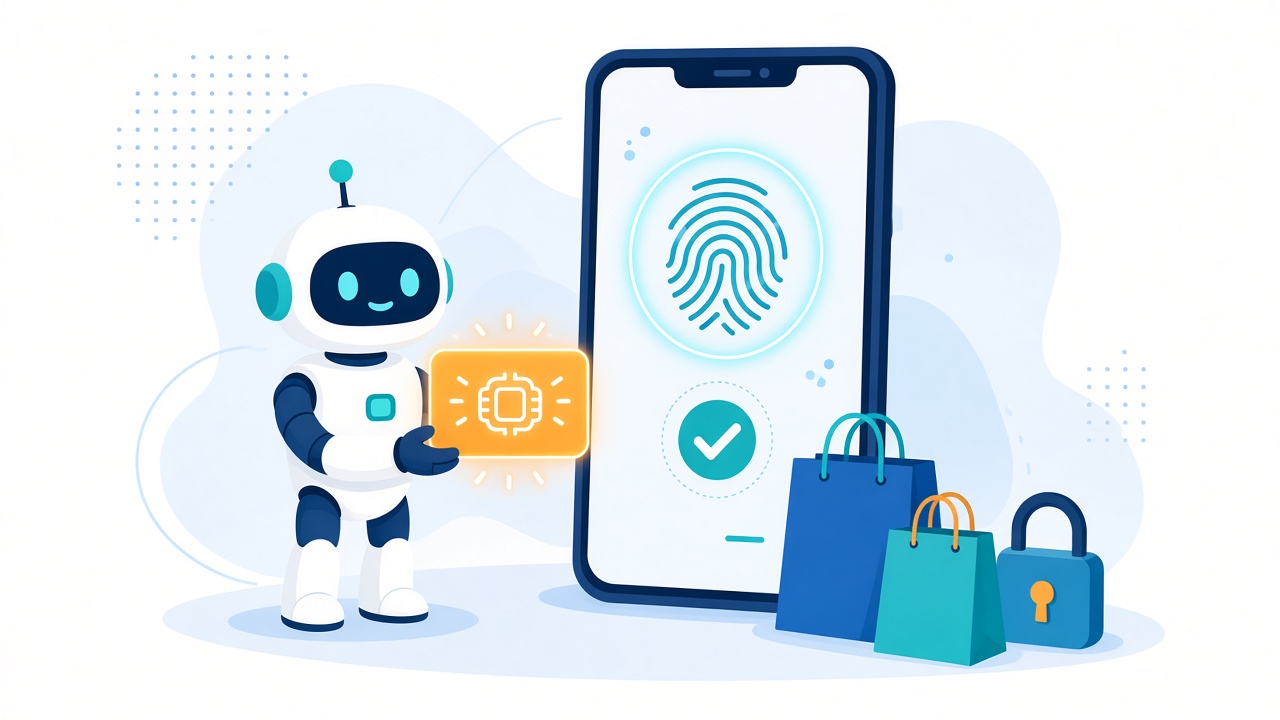
OpenAI on Friday launched ChatGPT Wallet, a payment feature that lets its dots agents buy things for users without ever seeing their card numbers. The wallet is rolling out first to ChatGPT Pro subscribers in the US who are 18 or older, and every purchase requires a biometric check before it goes through, the company said.
OpenAI called it "the first wallet that lets agents pay without access to users' actual card details and that requires a security check for every purchase." The company built it with the major card networks and said users keep their existing card rewards and dispute protections.
How a purchase works
A user adds a card once in a secure form, not in the chat. When the dot is ready to check out, it shows the merchant, items, total and selected card. The user approves with Face ID or Touch ID, according to OpenAI's help center.
After approval, the payment network issues a payment token, a stand-in card number with its own security code and expiration date. The charge lands on the user's real card, but neither the merchant nor the agent sees the actual details, OpenAI said. CNBC reported that the token is scoped to a single transaction.
Eligible cards are US-issued American Express, Chase, Mastercard and Visa cards, per the help center. Wallet works only inside conversations with a dot, OpenAI's always-on agent product, and not in standard chat or standalone Codex threads.
The help center also warns that approval does not confirm an order.
"Ready to check out means your approval is complete. It does not confirm that the merchant has placed your order," it says. If a user agrees to a subscription, the merchant may store the credential and charge it again under those terms.
Partners and merchants
Card network executives each gave statements. Luke Gebb, who heads global innovation at American Express, said ChatGPT Wallet "marks our first American Express Agentic Commerce Experiences integration."
Mastercard's Sherri Haymond said "an agent making a purchase should strengthen, not bypass, the trust built into payments." Gebb told CNBC the limited rollout is the "right approach to make sure things are working."
OpenAI acknowledged that much of the web is not ready for agent shoppers. "Some sites may unintentionally block purchases through ChatGPT Wallet or other agentic payment products," the company wrote. It published a Commerce Partner Playbook alongside the launch.
The playbook asks merchants to configure firewalls and CDNs to recognize signed agent requests using Web Bot Auth. It also tells them to work with their risk providers, because fraud systems may still flag legitimate agent purchases.
OpenAI said it is working with fraud prevention firms Forter, Riskified, Sardine and Signifyd, plus payment processors including Adyen and Stripe. Sites can also expose WebMCP tools so agents can act through a merchant's own systems.
OpenAI said 1.2 billion people use ChatGPT each week, and many of them already use it to research purchases.
Toward pre-approved spending
For now, a human approves each purchase. OpenAI said it expects users to eventually "delegate purchases entirely to their agent" by setting limits such as spending caps or purchase categories, with enhanced safeguards. Reuters reported the same plan.
According to the wallet terms, effective Nov. 12, users can already "grant ChatGPT the authority to approve each purchase in advance," though the launch flow described by OpenAI requires a check every time.
The wallet terms also state that it does not create a bank account or stored balance and does not extend credit. OpenAI said it will expand availability after learning from early use with businesses and banks. It did not give a timeline for other plans or countries.
Source: OpenAI, “Introducing ChatGPT Wallet”
Additional sources: OpenAI Help Center, “Making purchases with ChatGPT Wallet”; OpenAI, “ChatGPT Wallet terms”; CNBC, “OpenAI's ChatGPT Wallet allows 'dots' AI agents to make purchases”; Reuters via Investing.com, “OpenAI launches ChatGPT Wallet, letting AI agents pay for purchases”