Steve Ruiz, founder of the whiteboard tool tldraw, posted a one-line coding-agent prompt on Oct. 31 that has since drawn more than 8,300 likes and about 15,600 bookmarks. The prompt is: "find all of the implicit state machines in my app." Shopify CEO Tobi Lütke quoted the post on Nov. 7 with two words, "It works," and educator Kent C. Dodds posted a longer refinement on Nov. 9.
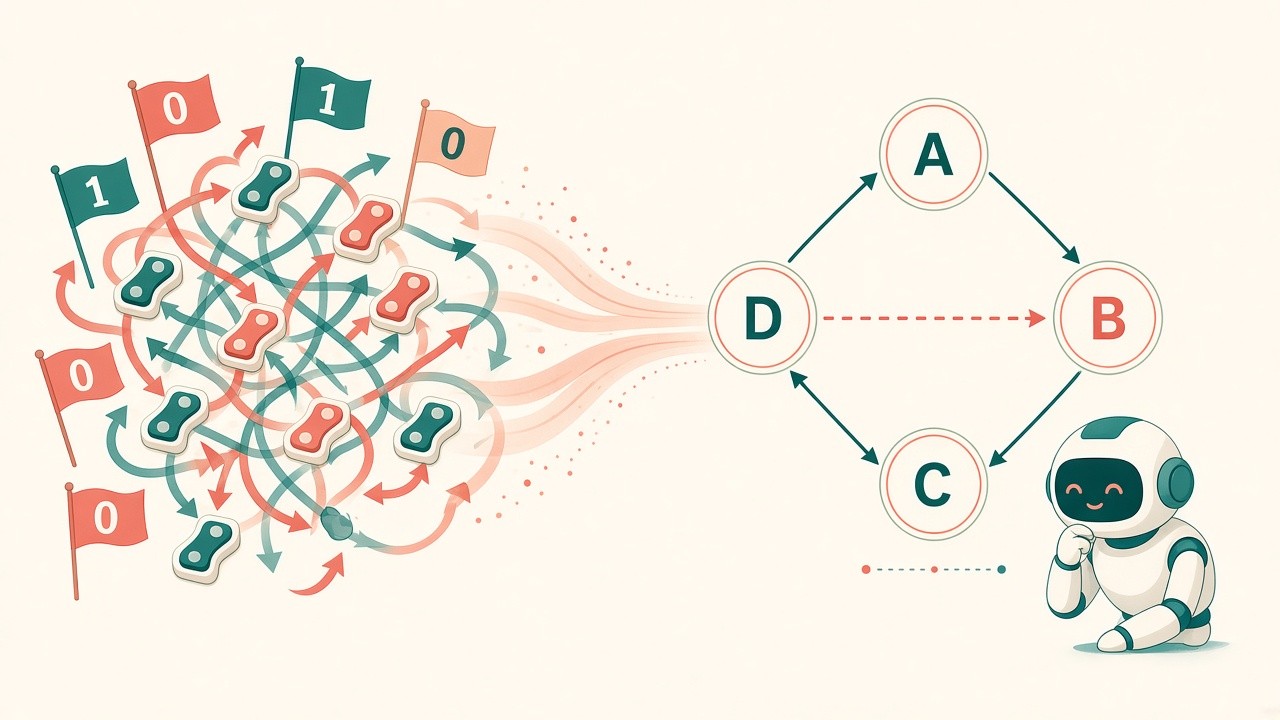
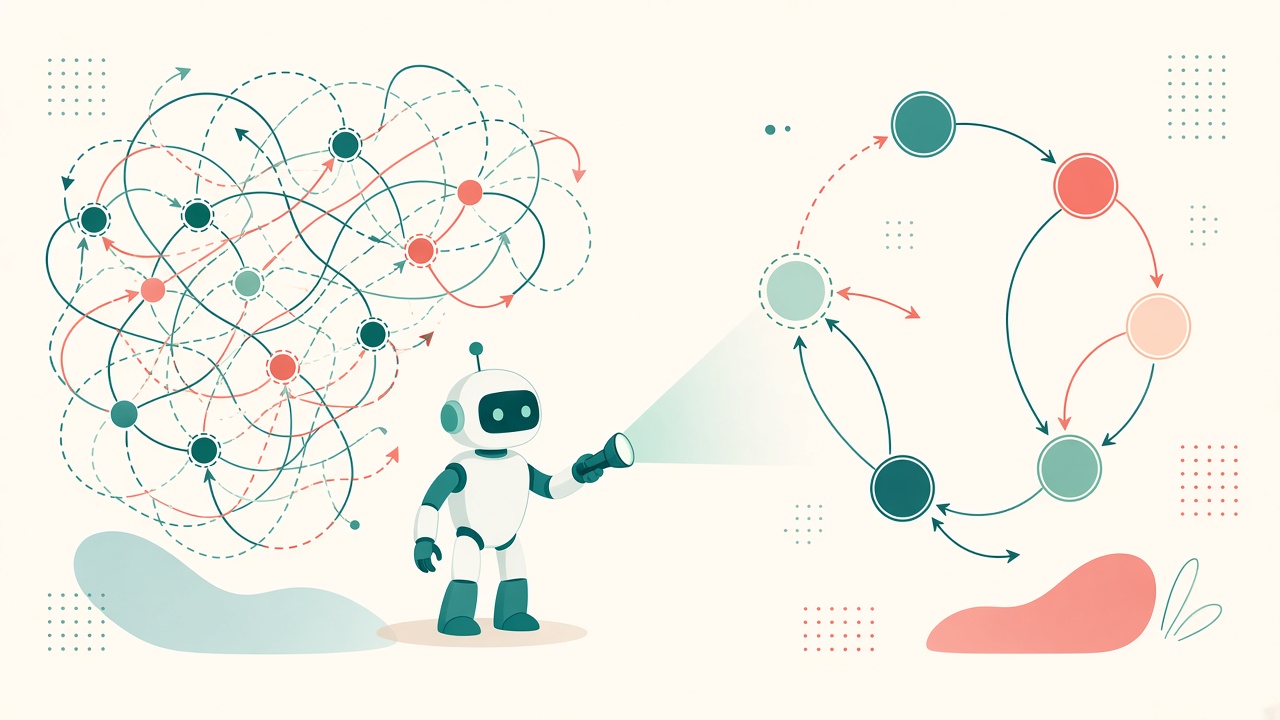
The instruction is spreading because it asks an agent to name something codebases already depend on but rarely write down. An implicit state machine is behavior that moves through stages, such as idle, loading, success or cancelled, without a single clear type or diagram. The stages often hide in boolean flags, status strings, callbacks and retries spread across files.
What an implicit state machine looks like
Ruiz has argued that state machines are a software pattern, not a library requirement. In a Nov. 6 reply, he wrote that XState is useful for complex cases or for testing and visualization, but that most of the benefit can come from a discriminated union, a single status field with matching data. "You don't need a library to get majority benefits of the pattern," he wrote.
The bugs that follow from the hidden kind of machine are familiar. A user cancels just as a background job finishes. A second click starts another export. A timeout leaves the app unsure whether work already happened. Each of those events can land in a different handler that disagrees about what "done" means. The prompt's job is to make those disagreements visible before a person asks an agent to change the feature.
How people are using the prompt
Ruiz's original wording stays short on purpose. Lütke's quote did not add instructions. It only confirmed that running the line against a real codebase produced useful results for him.
Dodds published an adjusted version on Nov. 9 that keeps Ruiz's find step and adds product constraints. His prompt, as posted, reads: "Find all of the implicit state machines in my app (there are probably a ton). Make the best decision that will elevate all three: the user experience (UX), developer experience (DX), and agent experience (AX) always, without breaking anything. Also, make state machines explicit."
In a separate Nov. 9 reply, Dodds linked a pull request on the Kody codebase where he said he had asked an agent to move implicit state machines to explicit ones. The request shows the pattern moving from discovery into a concrete change set, not only a list.
A practical way to use either version, based on how Ruiz has described the pattern in replies, is to start read-only. Ask the agent to list candidate machines, the variables involved, the files that touch them and any illegal combinations, without rewriting code. Then pick one painful flow, agree on the intended transitions, and convert that flow first. Ruiz wrote that teams do not need a library to get most of the benefit, which points away from a wholesale rewrite into a state-machine framework.
Limits and attribution
The prompt does not invent missing product rules. If "completed" could mean a file exists, a link was sent or a customer received the download, an agent still needs a person to choose which promise the product makes. Several secondary posts have repeated the line without naming Ruiz; the Oct. 31 post is the primary source for the short form, and Dodds credited Ruiz when he posted his longer cut.
No peer-reviewed study backs the Monday claim that the prompt alone reduces production bugs. The evidence so far is practitioner reports: a high-traffic original post, Lütke's confirmation, Dodds's refinement and public examples of agents listing or rewriting state in real repositories.
Source: Steve Ruiz, Steve Ruiz, “good prompt "find all of the implicit state machines in my app"”
Additional sources: Tobi Lütke, Tobi Lütke, “It works”; Kent C. Dodds, Kent C. Dodds, “Try this prompt I slightly adjusted”; Steve Ruiz, Steve Ruiz, “state machines themselves are just a software pattern”; X trending, “A simple prompt that has coding agents find hidden "implicit state machines"”