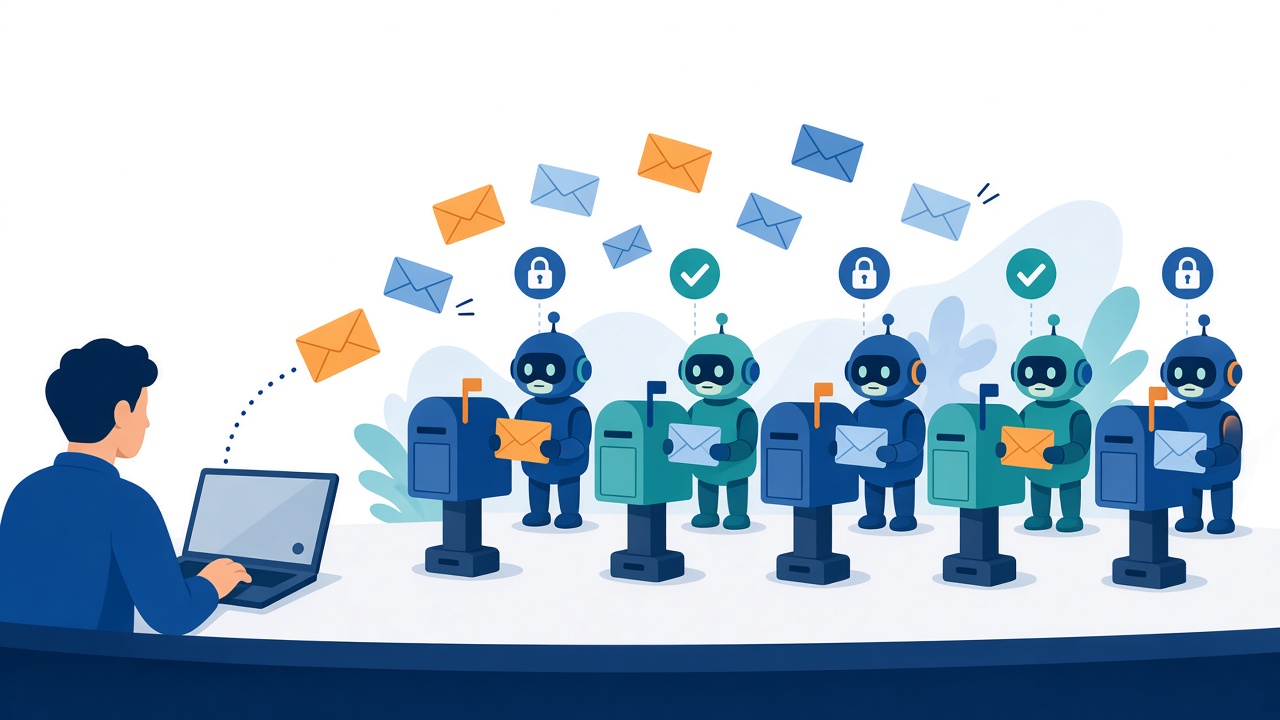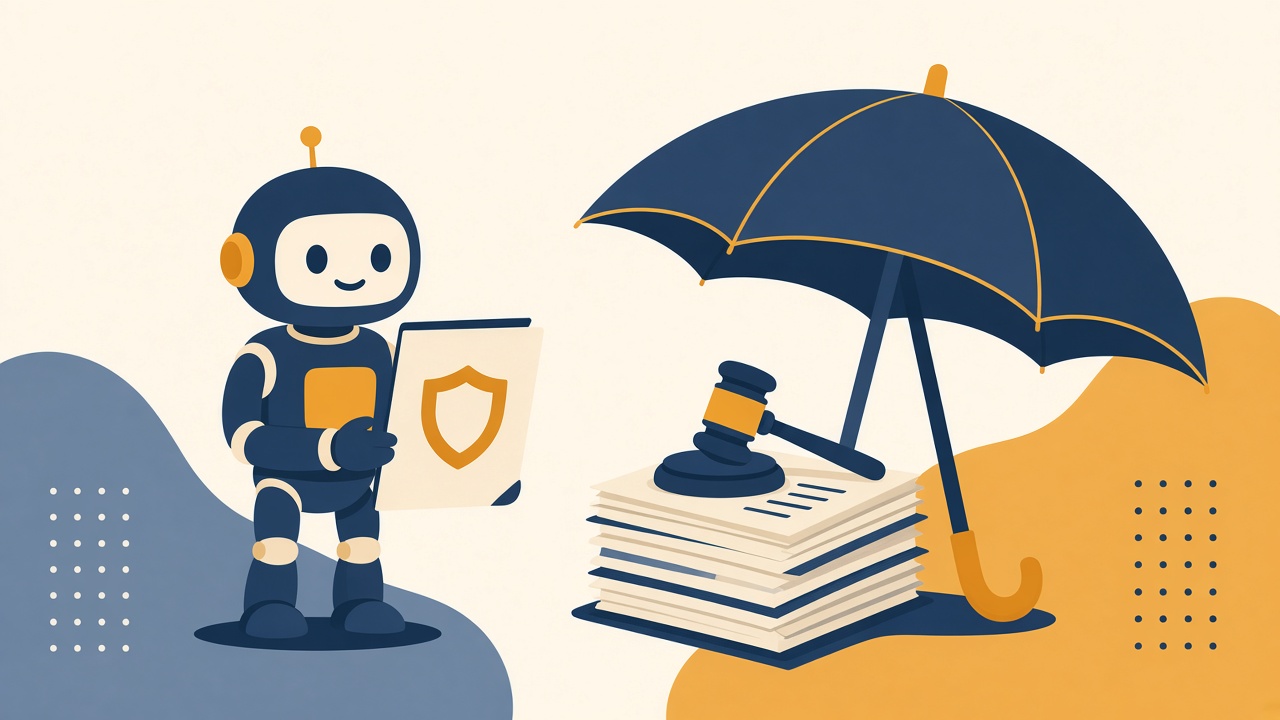
An AI-native law firm has bought insurance that covers its software agents when they work without a lawyer checking the output, one of the first public examples of a policy written for agent labor rather than for people who use AI tools. Crosby, a New York firm, bought $5 million of AI liability coverage from Testudo, a 2-year-old insurer backed by Lloyd's of London, The New York Times reported on Nov. 7.
Crosby uses AI for most of its contract review, with about 60 lawyers overseeing the process, according to the Times. Founder Ryan Daniels spent about six months finding a carrier willing to write the policy. After it took effect last week, the firm removed lawyer supervision from what it calls gray-area tasks, which it says make up about 20% of its work.
What the policy covers
The coverage applies to paralegal tasks that sit between clerical work and the practice of law, the Times reported. Examples include answering a question about a document or applying a firm's playbook rules to it. When a lawyer approves that kind of work, it already falls under the lawyer's professional liability insurance.
The harder case is output that no human reviews. David Freeman Engstrom, a Stanford Law School professor, told the Times that a malpractice policy could cover unsupervised agents. He added that "an insurer could argue that a machine output generated without lawyer supervision is not a service rendered 'as a lawyer' and so falls outside the policy."
Big carriers are pulling back
Crosby's deal comes as mainstream insurers move to keep generative AI out of standard business policies. The Insurance Services Office, which writes standard policy language, made exclusions for some losses caused by generative AI available for commercial general liability policies in January, according to the Times.
As of April, at least 16 of the 20 largest liability insurers had filed with state regulators for permission to exclude generative AI, according to filings compiled by investment firm Wolfe Research and cited by the Times. Approval gives insurers that option but does not require them to use it.
Many in the industry expect AI risk to follow the path of cyber risk, which carriers first excluded and later sold as a separate product, according to the Times. Startup insurers are moving into the gap. The Times named Testudo and the Artificial Intelligence Underwriting Co., or AIUC, among several newer carriers, many of them backed through Lloyd's.
How underwriters size agent risk
There is no standard method yet. AIUC audits a customer's guardrails and runs tests built on thousands of replicas of real incidents where AI failed, according to the Times.
Testudo leans more on profiling a company's liability exposure, such as how likely a firm in a given location is to be sued, while also reviewing its AI technology and procedures. Testudo CEO George Lewin-Smith told the Times that most of its clients are long-standing businesses such as banks and hospitals.
Legal malpractice carriers are watching too. Eileen Garczynski, a principal at broker EPIC Law Firms, runs an annual survey of claims leaders at legal liability insurers. This year it covered 13 providers that together insure more than 80% of the 200 largest law firms, and seven said they had seen more AI-related claims in the past year, the Times reported.
The rules still require a lawyer
Insurance does not settle the licensing problem. State law bars practicing law without a license, and ethics rules require lawyers to supervise nonlawyers who help deliver legal services, according to the Times. In September, California passed a law stating that "an attorney shall not delegate the practice of law to generative artificial intelligence."
Daniels told the Times he assumes bar associations will "start to relax what agents can do" within a year or two, and that Crosby wants its agents already insured when that happens. Anthropic warned in its S-1 filing that "the insurance market for AI-specific risks is nascent and evolving," the Times reported. Neil Kessler of wholesale broker CRC Group told the paper there was no way to validate which underwriting approach works best until more lawsuits play out.
Source: The New York Times (via The Daily Gazette), Sarah Kessler, “Law Firms Have Malpractice Insurance. Should Their AI Agents?”
Additional sources: Quartz, “A.I. law firm Crosby bought $5 million in liability insurance for its agents”; The Lawyer, Ben Lucas, “AI-native firm Crosby secures landmark insurance deal for its AI agents”