The team behind Terminal-Bench, a benchmark that tests AI agents on work done in a command-line terminal, has released version 4.1 with rebuilt grading code meant to stop agents from gaming their scores. The maintainers re-graded the previous version's leaderboard with the new checks and found that about 1.16% of 11,550 trials changed score, with every agent's result staying inside its earlier 95% confidence interval, the team said.
The release keeps the same 66 tasks as Terminal-Bench 4.0 but modifies all of them, according to a Nov. 9 write-up from Snorkel AI, which contributes tasks and data to the project. The version was tagged on GitHub on Nov. 3.
Why the graders needed a wall
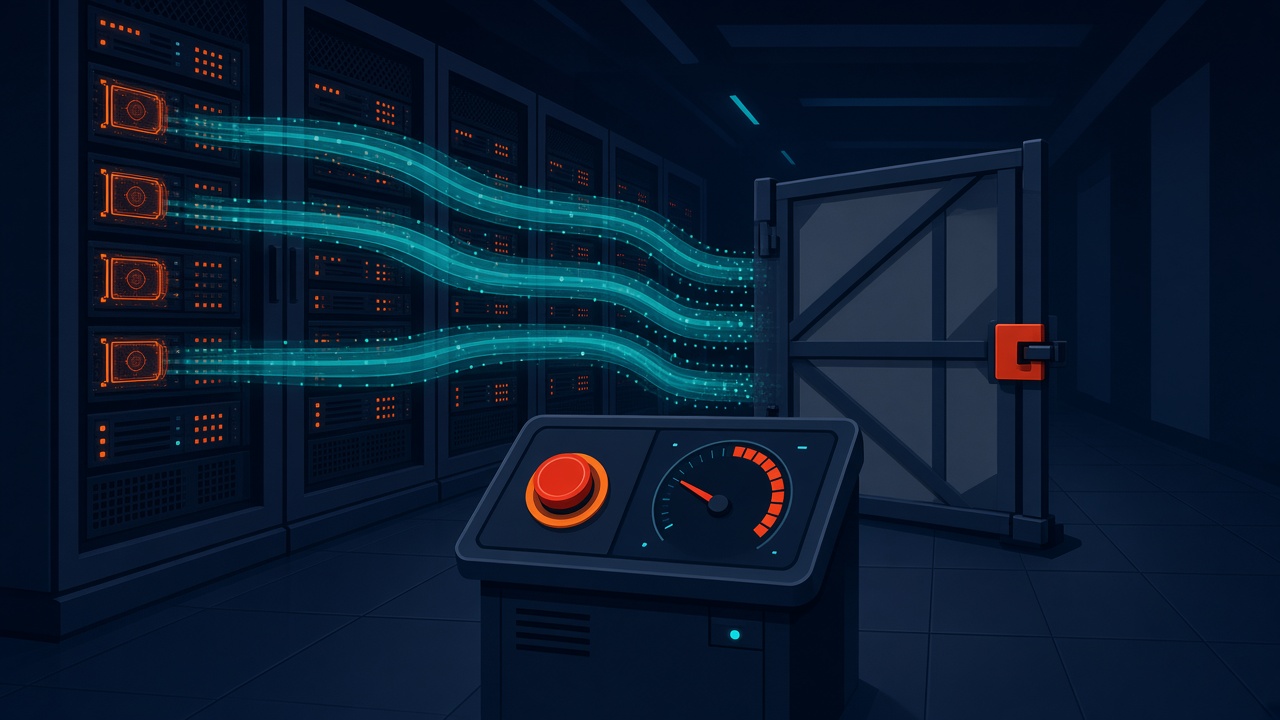
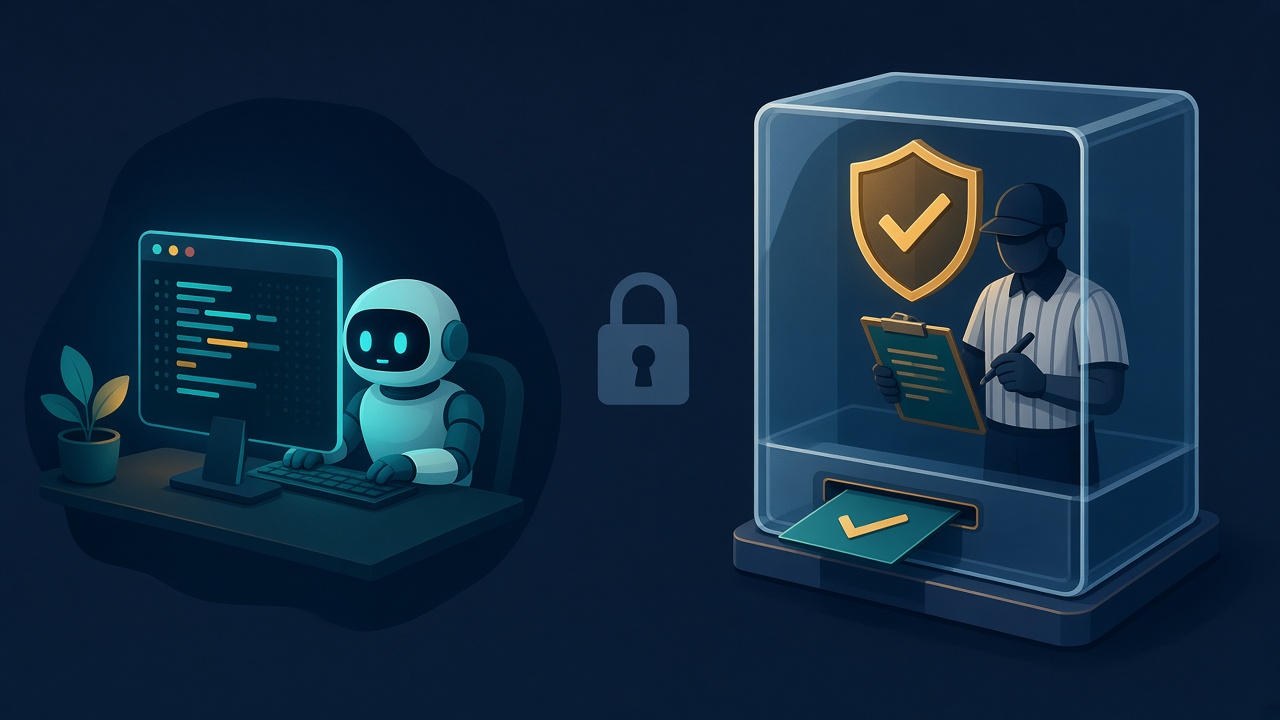
In Terminal-Bench, an agent works inside an environment toward a concrete goal and leaves a result for a program called a verifier to grade. According to the Terminal-Bench team, 44 tasks in version 4.0 run code written by the agent during verification. "Executing code in the same process that grades its outputs can allow it to tamper with the evaluation," the team wrote.
In one scenario the team described, an agent's artifact patches the pytest testing library so that tests pass by being skipped. In another, executed code leaves a background process running that overwrites the reward file after grading.
The team said it had not directly observed most of these exploits on the leaderboard, and its post says many reported exploits "remained theoretical." The changes respond to recent benchmark audits by groups including Epoch AI and Tokenless, the team said.
How RewardKit Workers isolate code
Version 4.1 relies on a Worker class in RewardKit, a verifier package from the team behind the Harbor evaluation framework. Before agent artifacts enter the verifier container, Harbor strips symlinks and permissions that could be used to tamper with grading, according to the Terminal-Bench post.
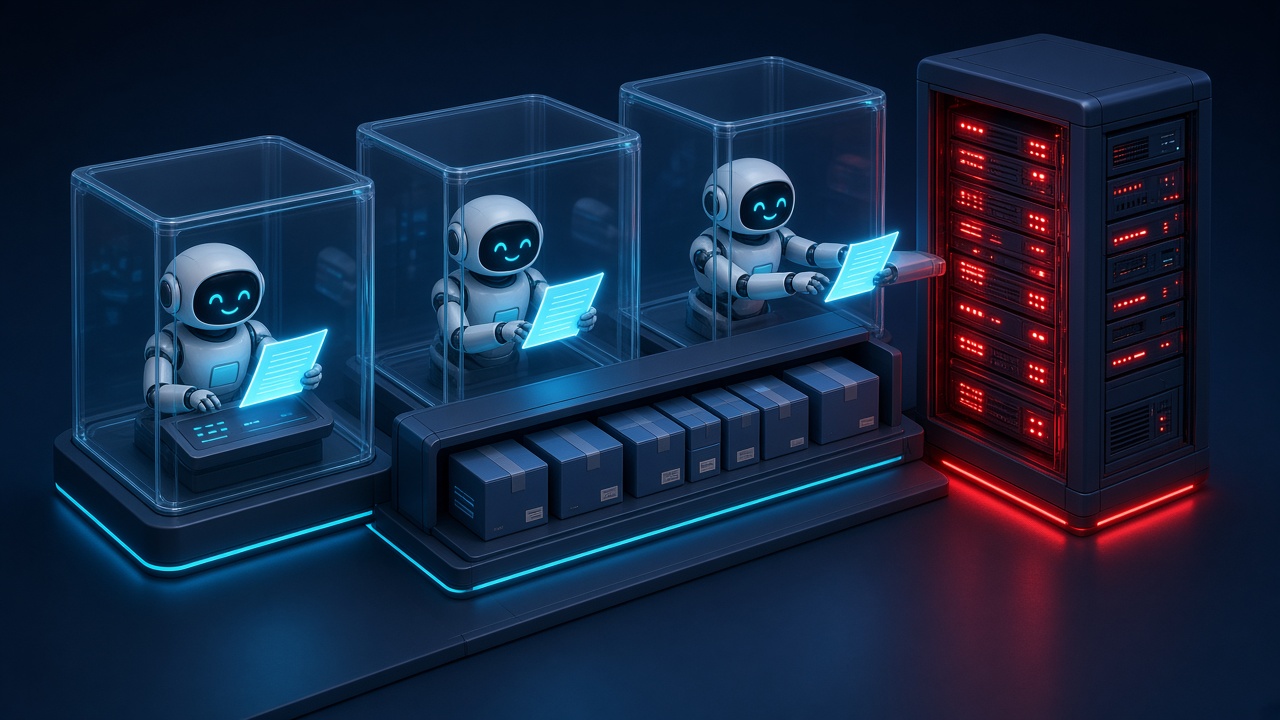
The Worker then runs the submitted code as an untrusted user in a separate process, so it cannot read the tests or change the reward file. It kills any processes the code left behind before the trusted grader assigns a score.
Snorkel's write-up says the Worker protects the grading reward but "is not a general-purpose machine sandbox," and that task sandboxing and resource limits still matter. Workers are used in the affected verifiers rather than in every task, the company notes. The release also pins container images and task dependencies, and it adds a CPU-only dataset of 63 tasks.
What the re-grade found
Re-grading reused saved artifacts from 4.0 leaderboard submissions, which had cost a combined $116,000 in inference, according to the team. Running them through the 4.1 verifiers required no additional inference spending.
Of the 11,550 trials, 162 changed score, according to the post. The team manually reviewed them and classified 134 as expected results of its verifier changes and 28 as measurement discrepancies between verifier runs, for which it kept the original 4.0 scores. Among the 134 flips, 89 were false negatives, where correct work had been marked as failing, and 45 were false positives.
The false negatives came from verifiers with assumptions that were too narrow, the team said. In a task that asks agents to compose music in the style of Bach, the 4.0 checker required leading notes to resolve immediately to the home note, while the 4.1 version accepts a delayed resolution, "as Bach did." In a FreeCAD modeling task, the old verifier rejected parts built from native 3D primitives instead of extruded 2D sketches.
All 35 agents' updated scores fell within the 95% confidence intervals published for their 4.0 submissions, according to the team, which concluded that the bugs and reward hacks it addressed "were not rampant in TB 4.0."
A separate review of version 4.1 published Nov. 10 by the Vetto research team said the isolation addresses shortcuts in which a submission changes the tests or reads an answer. It "does not establish that the tests cover every requirement or accept every valid solution," the review said.
The Terminal-Bench team said minor releases do not make agent-facing changes to task environments, and that deeper task changes are planned for version 5.0.
Source: Terminal-Bench, “Terminal-Bench 4.1”
Additional sources: Snorkel AI, “Terminal-Bench 4.1 hardens the verifiers behind the scores”; Terminal-Bench on GitHub, “v4.1.0 release”; Vetto, “Terminal Bench 4.1: a quality review”