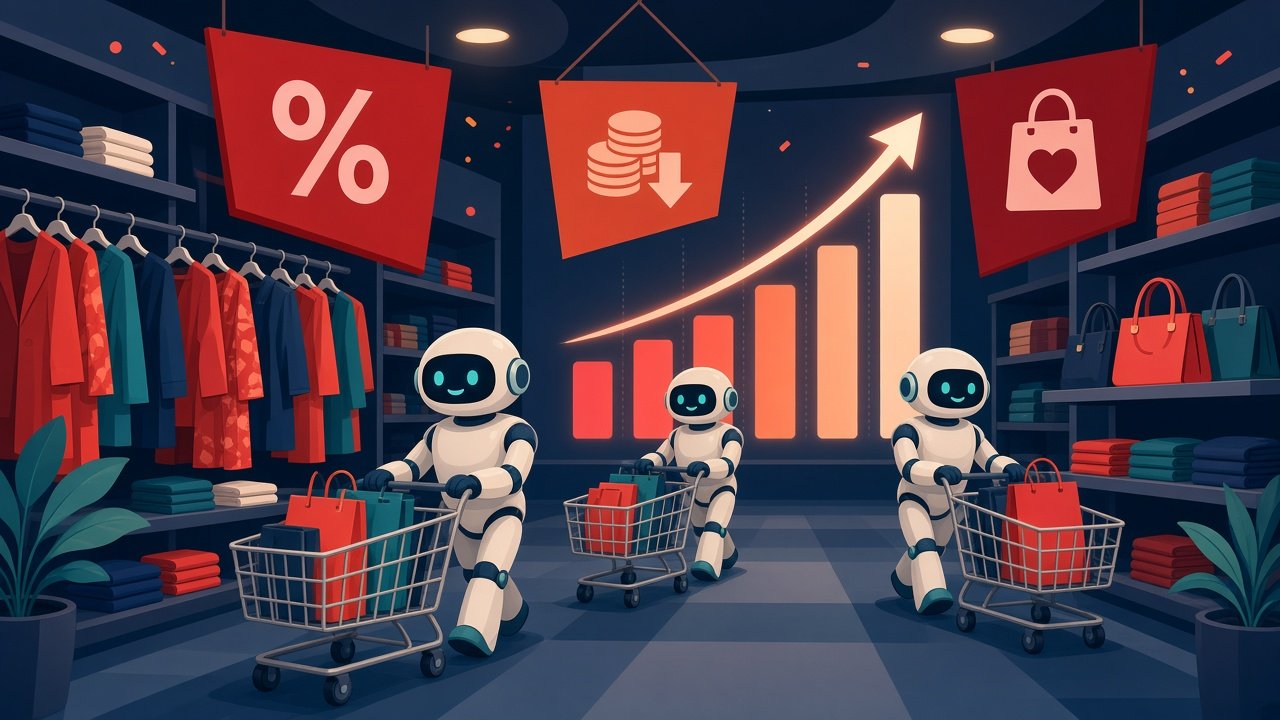
AI agents that shop and book for people are running into the same bot defenses websites use against scrapers and fraud. Nikita Bier, a former head of product at X, wrote on X on Saturday, Nov. 28, that his agent apps "kept getting blocked" during normal browsing, including Black Friday shopping and banking, and that "basically half the internet wasn't accessible."
Bier said he inspected the browsers those apps used and found they were sending "the most basic signals that X used to detect bots." His fix was a custom version of Chromium, the open-source base of Google Chrome, that hides those signals, running on a Mac Mini on his own home network.
The blocks come as agent shopping grows quickly. Stripe chief economist Ernie Tedeschi said the same day that Black Friday was the busiest day so far for agent purchases through the company's Link wallet.
How sites spot a bot
Bot detection is software that scores each visit on how likely it is to come from a program rather than a person. Cloudflare, one of the largest bot-detection providers, scores requests from 1 to 99, according to its documentation. A score from 1 to 29 means the request is likely automated.
The signals include how a browser sets up its encrypted connection. Cloudflare's glossary lists JA3 and JA4 fingerprints, which it says profile the software behind a connection across different addresses. Bier didn't list the specific signals his apps were sending.
Agents that announce themselves
The industry's other answer is to make agents identify themselves in a way sites can verify. Cloudflare announced Web Bot Auth in May 2025. It attaches a cryptographic signature to each web request, based on proposals at the Internet Engineering Task Force, the body that sets core internet standards.
Cloudflare said in an Aug. 28, 2025 blog post that it was adding a "signed agent" category for agents directed by end users. Its example was an agent asked to book "the best deal for a round-trip flight to New York City next month," running on remote browsers from companies like Browserbase and Anchor Browser.
Since July 1, 2026, Cloudflare has treated those agents as verified bots labeled "intermediary," according to its docs.
The label covers services that many users can operate, where "each action is initiated by a different end user." Cloudflare says that creates "transitive trust," since a site may trust the agent company but not every person using it. The company says it's testing a way to pass along information about that end user.
The Amazon test case
Identification is also at the center of Amazon's lawsuit against Perplexity over its Comet browser agent. The Ninth Circuit's Aug. 4, 2026 opinion says the core of the dispute was Perplexity's decision not to send a user-agent string, a label that would tell Amazon an AI agent was active.
The appeals court threw out an order that had blocked Comet from Amazon. "It is the user who 'accesses' Amazon's computers with the help of the assistant," Circuit Judge Milan Smith Jr. wrote.
The case is back before Senior U.S. District Judge Maxine Chesney. At a Nov. 20 hearing, Amazon lawyer Hagan Scotten called Perplexity a "rogue actor" violating Amazon's restrictions on AI tools, Courthouse News Service reported.
Perplexity lawyer Daniel Posner said "the user always directs the agent." Chesney paused discovery while she weighs Perplexity's motion to dismiss.
Source: X post, Nikita Bier, former head of product at X (independent source), Nov. 28, 2026, “Agent apps blocked during normal browsing”
Additional sources: Cloudflare docs, Cloudflare (company source), accessed Nov. 28, 2026, “Bot solutions glossary”; Cloudflare docs, Cloudflare (company source), accessed Nov. 28, 2026, “Verified bots”; Cloudflare blog, Cloudflare (company source), Aug. 28, 2025, “The age of agents: cryptographically recognizing agent traffic”; Court opinion, U.S. Court of Appeals for the Ninth Circuit (court record), Aug. 4, 2026, “Amazon.com Services v. Perplexity AI”; News report, Margaret Attridge, Courthouse News Service (independent source), Nov. 20, 2026, “Back in lower court, Amazon wants to continue suit against AI assistant”; X article, Ernie Tedeschi, chief economist at Stripe (company source), Nov. 28, 2026, “Black Friday was the busiest agentic day so far”