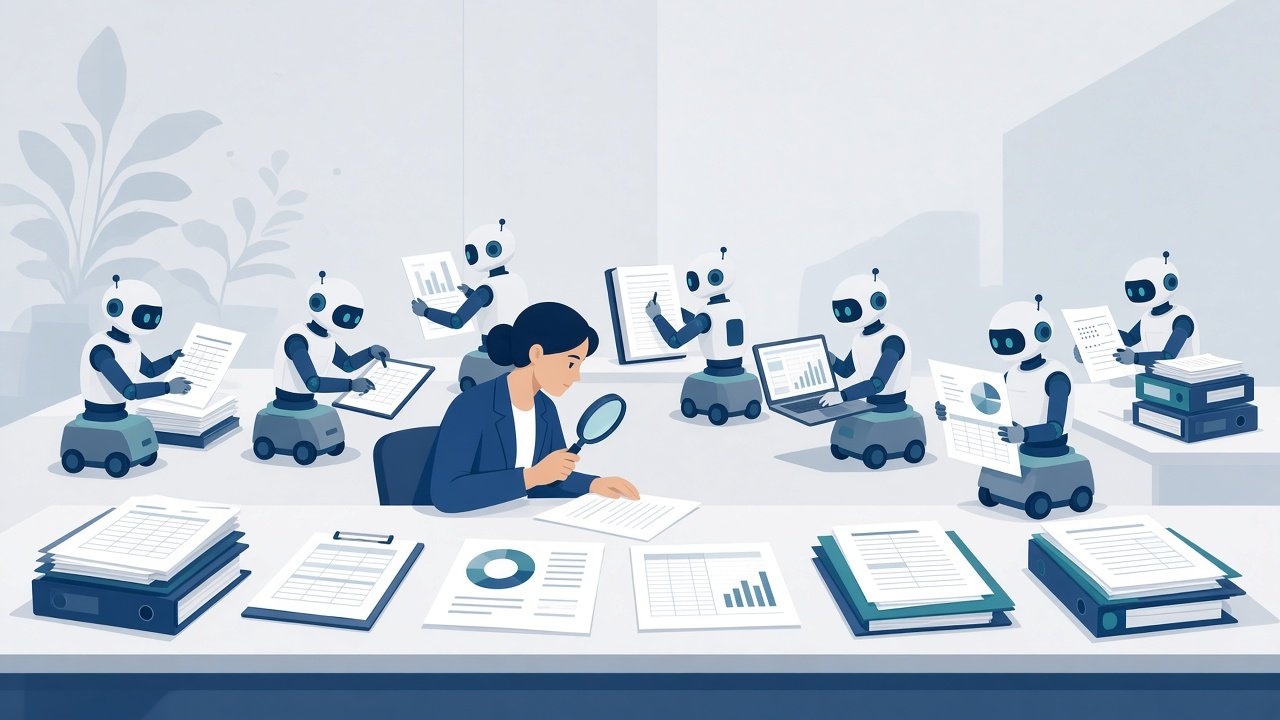
KPMG used more than 100 AI agents to audit the financial statements of an unnamed FTSE 250 company this year, running them alongside a conventional audit by its own accountants, the Financial Times reported. The FT story, which is paywalled, was republished by The Irish Times and summarized by Business Standard.
The trial, codenamed Project Exponential, applied agents across the entire audit process rather than to individual tasks, according to the reports. The agents gathered and analyzed data before preparing draft conclusions and observations. They also worked autonomously with one another and suggested next steps.
Deeper in places, with a human backstop
Cath Burnet, KPMG's UK head of audit, told the FT that in some cases the agents investigated issues more thoroughly than the regular team. "In several cases the AI was able to go so much deeper," she said, adding that the technology asked "better questions" in some situations.
Human intervention was still needed. Burnet said an auditor had to step in when an AI agent failed to match a set of regulations with the company's documents, according to the report.
A team built the agents in four months, the FT reported. KPMG declined to give the team's exact size but said two partners and one director worked with senior managers and junior staff to build and run them. An audit partner signed off on the experimental exercise, but KPMG did not rely on its findings when it formally approved the company's accounts.
Staff set the agents' objectives and supplied information about the company's business and previous audits. They also reviewed and challenged the agents' conclusions before the audit opinion was finalized, the report said. Burnet said the experimental team had a "different shape and size" from a traditional audit but that human involvement remained "critical."
Traceability as the selling point
Burnet said KPMG's system gives "full visibility and full traceability" of the agents' work. It records their interactions with documents down to individual characters and timestamps, she told the FT. KPMG gave the Financial Reporting Council a high-level overview of the experiment, according to the report.
That record matters to regulators. Mark Babington, executive director of regulatory standards at the UK's Financial Reporting Council, told the paper that "whatever technology a firm uses, the auditor remains accountable." He said auditors must be able to explain how they used the technology and stand behind the evidence.
Scale and fees still open questions
KPMG plans to extend the project to as many as 20 larger audits and eventually offer AI-based audits to clients, according to the report. The firm said the technology is not yet available at the scale needed for thousands of audits, and Burnet said some companies do not have clean enough data for the agents to work well.
KPMG acknowledged "clear time-saving opportunities" but did not say whether they would lead to lower audit fees, the FT reported. Audit firms have long relied on large teams of junior accountants for labor-intensive work under senior supervision.
Rival PwC has run its own parallel audit projects. Andy Hammond, PwC's global assurance leader, told the FT the aim was "to see how AI performs across the whole process without relying on it."
A Centre for Public Interest Audit report published in October found that 23% of audit committee chairs had "limited" confidence in the use of AI in audits of their companies' financial statements, the FT reported. Concerns included the risk that over-reliance on AI could weaken professional skepticism. Chairs also cited data security and the possibility of fabricated information.
The trial is one of the clearest public tests so far of a multi-agent system run end to end on regulated professional work. KPMG has not named the company involved, and the details above come from the FT's reporting rather than a KPMG publication.
Source: Business Standard, “KPMG finds AI agents ask better questions than human auditors in trial”
Additional sources: The Irish Times (Financial Times), “AI asked 'better questions' than KPMG accountants in pilot audit of effectiveness”