Anthropic's Applied AI team is advising companies that build agents on its platform to fold many of their subagents back into a single agent loop. In comparisons across several enterprise deployments, a single agent with skills "frequently outperformed" both a one-prompt-for-everything design and a subagent design on quality, often at lower cost and latency per task, the team wrote.
The guidance appeared in a post on Anthropic's site dated Oct. 22 and drew renewed discussion among developers on X this week. Anthropic also published a migration kit on GitHub to help teams test the change.
When the org chart becomes the architecture
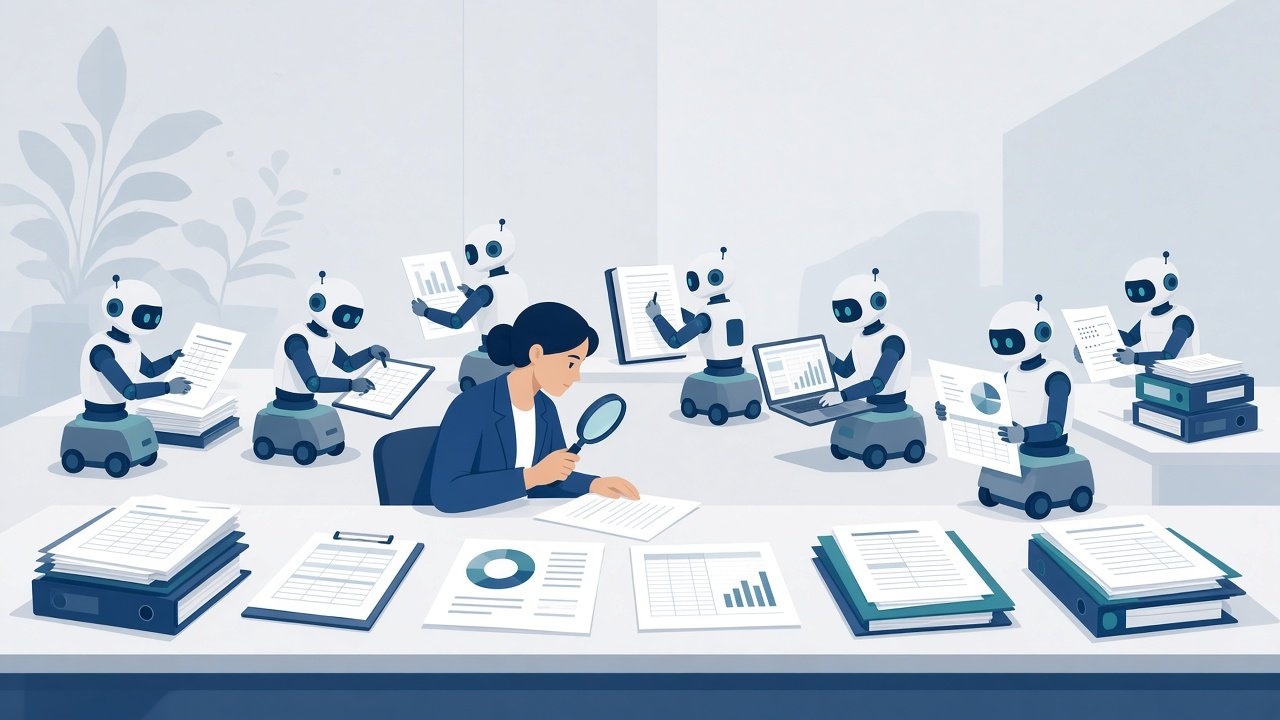
The post describes a common pattern in large companies. Each team builds its own agent for its product, and a central platform team adds an orchestrator on top, so the agent design copies the org chart. Anthropic called this "Conway's law at work."
According to the post, that setup loses context in handoffs between agents and produces hundreds of overlapping subagents with no clear owner. It also leads to system prompts where every team adds a sentence until the rules conflict, and to extra latency. Anthropic said local evals tuned to each subtask leave leadership deciding on "watered-down, overly localized scores."
The post gives two examples. One company found that the dozen specialist subagents inside its customer-facing agent made a consistent on-brand experience hard to keep and added latency, Anthropic said, and one customer saw a roughly 2x faster runtime after testing a single agent loop against its multi-agent harness.
What replaces the subagents
Anthropic recommends progressive disclosure, where the agent sees short descriptions of skills and tools and loads the full versions only when needed. The company said it cut Claude Code's system prompt for more advanced models by over 80%, partly through this technique.
The team also credits newer models. Starting with Opus 4.5, models could manage far more in a single loop than most teams expected, the post says, and rigid multi-agent structures were often what kept a new model from doing more of the work during customer migrations.
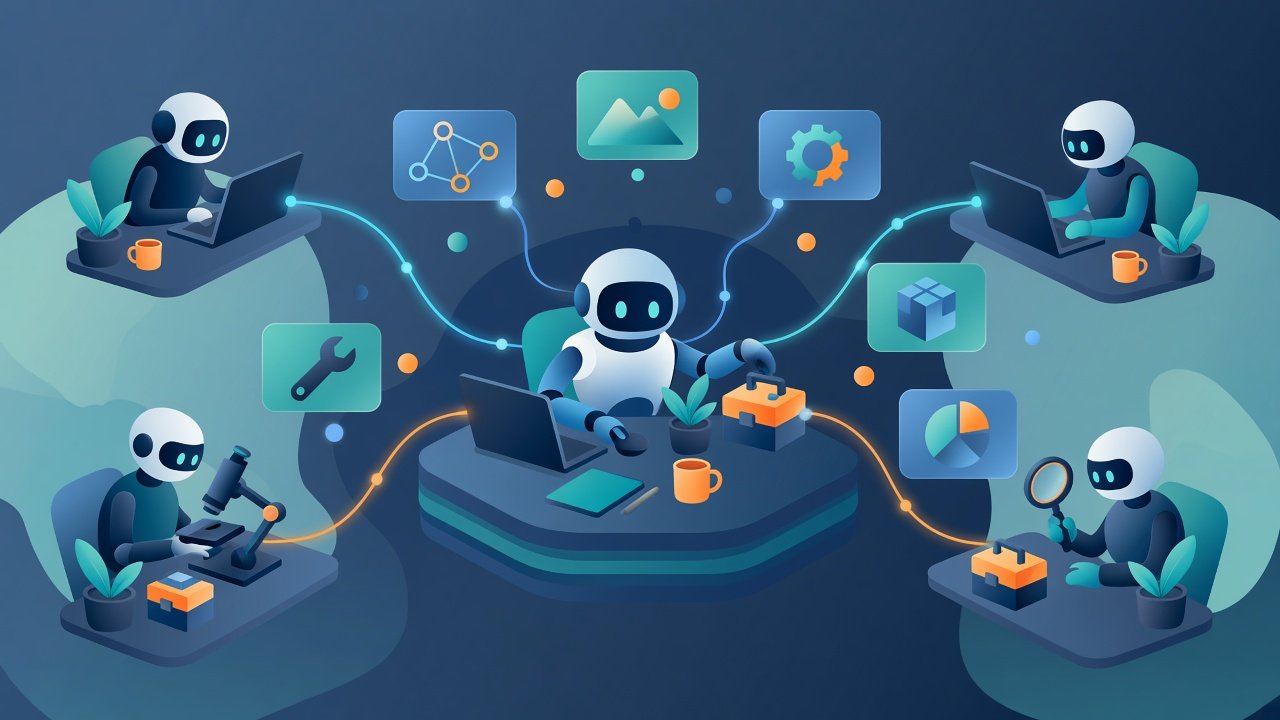
In the suggested design, one model and one context window run an open-ended tool loop, with turn and cost budgets and write gates set in the harness. The model writes its plan on the first turn and revises it as results arrive.
When to keep a subagent
Anthropic said subagents still have a place. It recommends keeping one when a single loop shows measurable degradation from context bloat, or when parallel tasks need fresh context windows that can be thrown away. A subagent can also make sense when one agent struggles to pick the right tools or faces conflicting instructions, the post says.
For teams that migrate, the post recommends building an end-to-end eval first and says even 10 golden examples is enough to start. Teams should then fold in one subagent at a time, turning its prompts into skills and its API calls into MCP tools, and compare results with and without it.
The company warned that a final score can hide regressions. When it tested the approach on a sample support agent, folding in one subagent lowered latency but broke a process that had been passing, and the break showed up in only one run out of two. Anthropic advised running each eval task more than once.
The post also says tool choice tends to degrade once a system prompt holds more than 30 to 50 tool definitions, and recommends grouping tools by user intent. Under the model it describes, one small central team owns the system prompt and end-to-end quality, while other teams own the skills and tools.
Source: Anthropic, “Building agents: When to fold subagents into your main agent loop”
Additional sources: Anthropic on GitHub, “single-agent-loop-kit”; The Decoder, “Anthropic says one AI agent beats many subagents”