Researchers at Google and Pennsylvania State University have proposed a way for automated agent-tuning systems to keep improving after the underlying model or benchmark changes. Their method, called Self-Improvement Memory (SIM), stores a written history of why each change to an agent was made and whether it worked, according to a preprint posted to arXiv on Nov. 13.
The paper targets the harness, the layer of prompts, tools, context rules and execution logic that wraps a model and turns it into an agent.
A growing body of work uses one AI system to rewrite another agent's harness over many rounds, a process the authors call recursive self-improvement. The model weights stay frozen while the harness changes.
The problem with carrying code alone
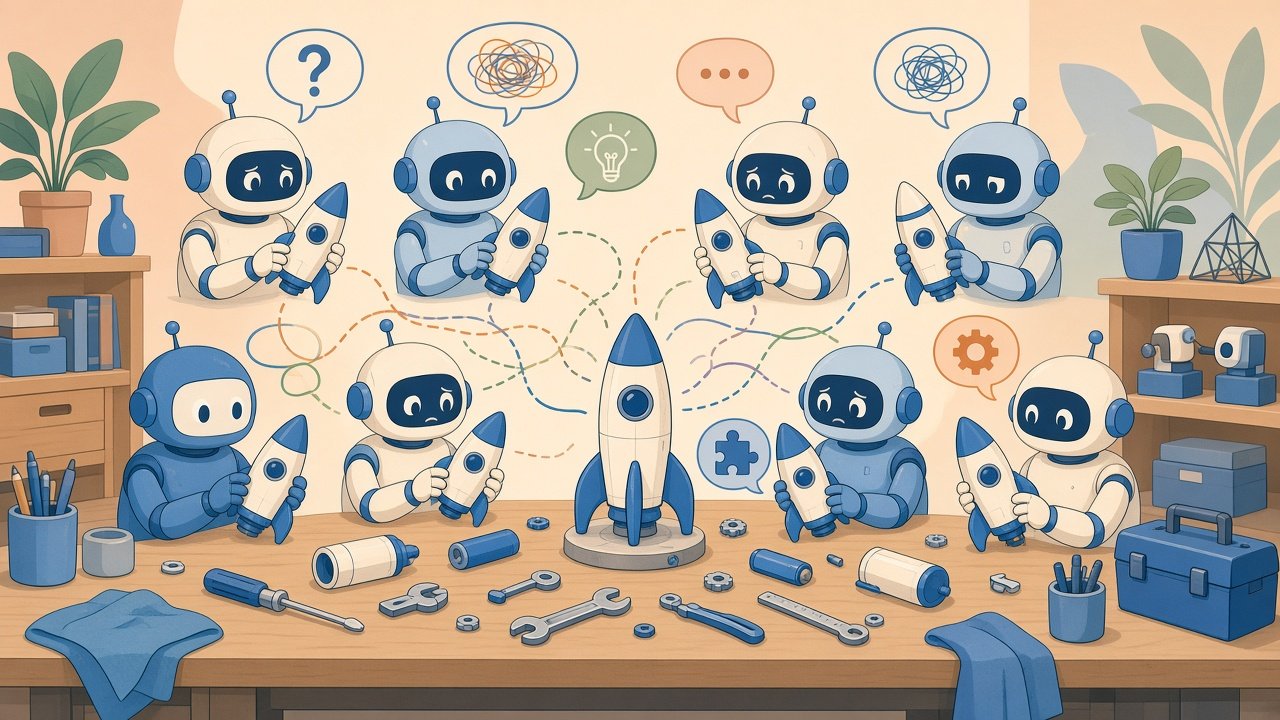
According to the authors, that kind of optimization is usually studied with one fixed model and one fixed benchmark. When a team swaps in a new model or moves to a harder test, the evolved harness can be reused, but the code does not explain why earlier edits were made or how they performed.
The project page gives an example: a check that verifies a task is finished after a command succeeds. The code survives a move to a new setting, but "the diagnosis, rejected alternatives and conditions behind the edit may not," the page says, so the next optimizer has to reconstruct its purpose.
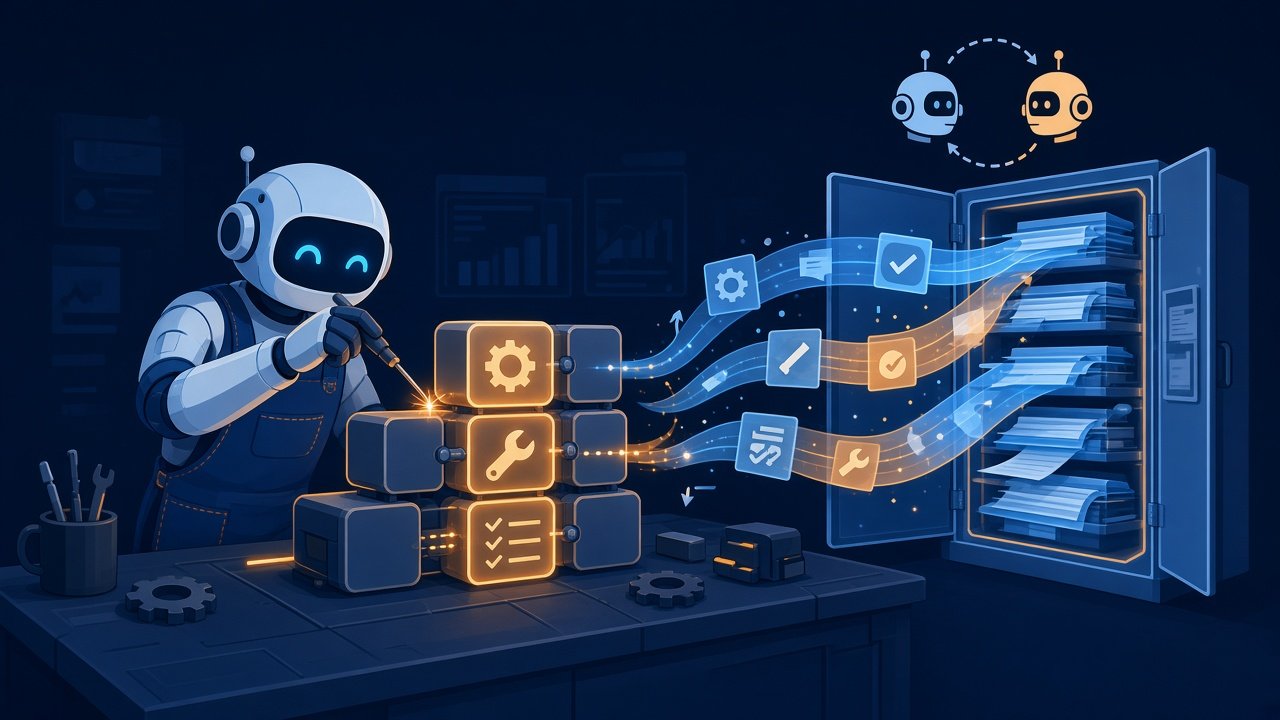
SIM addresses that by grouping edits under recurring problems, such as an agent declaring a task complete too early. Each entry records the change and its rationale, the outcome the optimizer predicted before testing, the outcome it actually observed, and the setting where it was tried.
Both the component that proposes new edits and the component that picks winners read the full record each round. The authors call the overall setting Continual Recursive Self-Improvement, or CRSI.
What the experiments found
The team tested SIM in four domains: coding on Terminal-Bench, text classification, agentic workspace tasks and engineering design. With matched starting harnesses and equal round and candidate budgets, the paper says the full version of SIM finished ahead of carrying the harness alone in all six cross-dataset transitions and all four tests that moved from Claude Opus 5.5 to Gemini 3.8 Flash.
The widest gap came on workspace tasks after that model switch. Both conditions started at 68.41. The harness-only run reached 73.42, while the run with SIM reached 84.75, according to the paper's results table.
For coding, the authors ran ten independent source optimizations on Terminal-Bench 2.1, then continued each on Terminal-Bench 4 twice, once with SIM and once without, according to the paper.
SIM finished higher in nine of the 10 pairs. Mean final scores were 21.70 with SIM and 19.33 without, from a shared starting average of 18.36. The paper reports a mean advantage of 2.36 points, with a p-value of 0.003.
The researchers also carried one harness and its memory through successive Gemini models. Continuing beat a fresh optimization run by 3.5 points on Gemini 3.5 Flash and 1.6 points on Gemini 3.8 Flash, but finished 0.8 points lower on Gemini 4 Argon, the paper says.
Stated limits
The authors are explicit about what the work does not show. The project page says the study "does not establish unbounded self-improvement" and does not show that the gains transfer to any setting. The evolved harness has to remain executable in the new setting, so arbitrary changes of task or interface fall outside its scope.
Budgets were matched by rounds and candidates, not by tokens or time. Because SIM is read in full without retrieval or truncation, the page notes, a growing memory carries a cost. The results are reported by the authors in a preprint that has not been peer reviewed, and the project page says no public implementation is linked.
The paper lists Xin Yu as first author and says the work was done during an internship at Google, with co-authors from Google Cloud AI and Google DeepMind.
Source: arXiv, “Self-Improvement Memory Enables Continual Recursive Self-Improvement”
Additional sources: SIM project page, “SIM: Self-Improvement Memory”