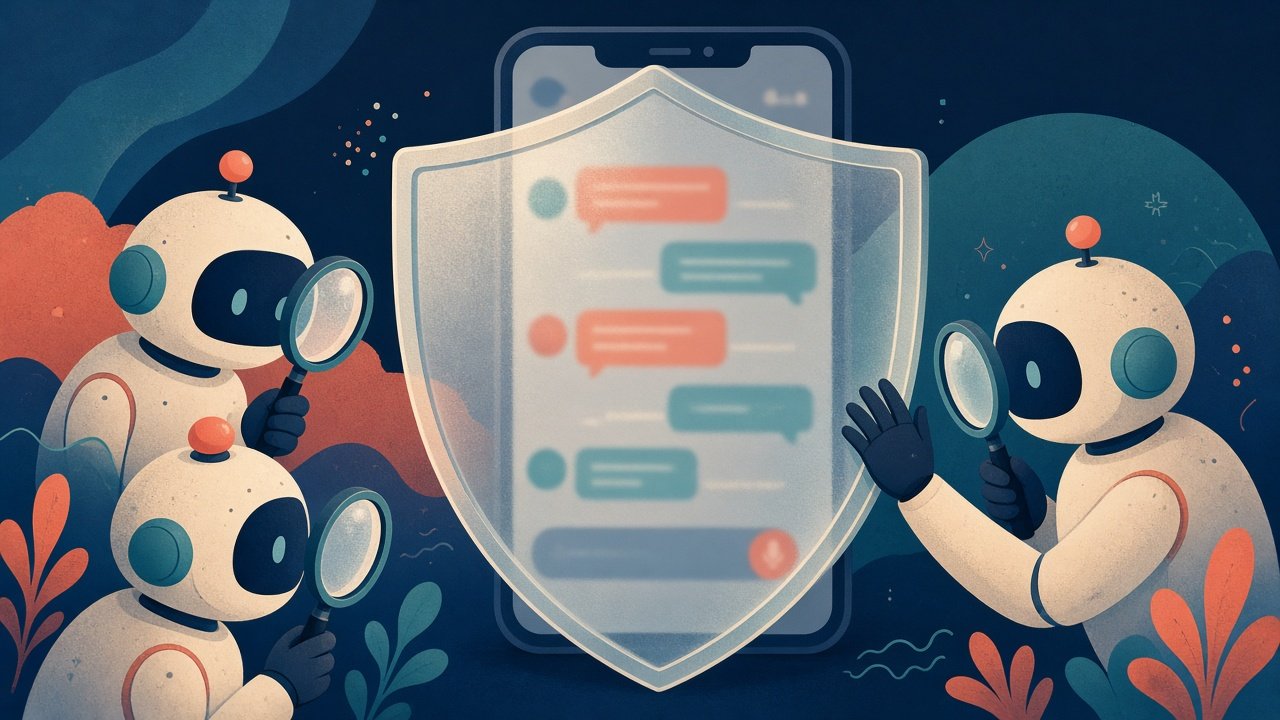
Signal is blocking screenshots inside its mobile app to stop AI agents built into phone operating systems from capturing users' messages, the encrypted messaging nonprofit said in a blog post dated November 20. The protection covers iOS 27, and on Android the app switches on its "Screen security" setting when it detects an AI assistant trying to read a Signal screen.
Signal president Meredith Whittaker wrote that agentic features built deep into operating systems, naming Gemini Intelligence on Android and Onscreen Awareness with Siri AI on Apple devices, are "an existential threat to Signal, and our ability to responsibly uphold our mission."
Why screenshots
According to the post, OS-level agents "scan" what is on a user's screen to answer questions and carry out tasks. Once Signal content is captured that way, Whittaker wrote, it becomes available to "whatever local database or remote server an OS-level AI agent is using at that moment," outside the app's control.
She argued that this undercuts protections Signal has relied on for more than a decade, including its open source code and formally verified encryption protocol. The capture affects every participant in a conversation, not only the person whose phone runs the agent, the post says.
Signal used the same approach last year against Microsoft's Recall on Windows 11, which takes periodic screenshots and turns them into a searchable on-device database. Signal blocked screenshots of its Windows app by default to keep Recall from storing messages, TechCrunch reported.
Opt-out and limits
Users who want screenshots back can turn the protection off in Signal's settings. Whittaker wrote that doing so "will potentially expose your (and your contacts') Signal content to these AI agents, and break our privacy guarantees."
The company called its fix incomplete. Restricting screenshots does not stop agents from reaching data by other routes, such as reading content already stored on a device's filesystem, according to the post.
Coverage on Android is also partial. Signal wrote that many Android vendors give it no reliable way to detect screenshot attempts, so it chose to watch for an assistant accessing the screen instead.
On macOS, Signal says it cannot block screenshots reliably because Apple lacks clearly documented APIs for it. The post describes "a minefield of bewildering decisions," including screen protection tools that only work for streaming media and other DRM-protected content. For now it recommends that macOS 27 users add Signal to the Excluded Apps list in the Siri section of System Settings.
Asks for OS makers
Signal said it spent months on forensic investigations across Android and iOS to learn what happens when these assistants access app data, because documentation is lacking. It is asking Apple, Google, Microsoft and other platform owners for two changes.
First, developers should get "an easy and well-documented way to opt their app out of AI data access and processing," covering screen reading, filesystem access, notifications and APIs. Second, operating system companies should publish clear technical specifications on how their agents access and process data. The post says confidential computing approaches "are not a complete solution."
The post also points to third-party agents such as Meta's Muse, which it says can lean on accessibility permissions users are encouraged to grant during setup. Those settings were meant to help people use apps, Whittaker wrote, "not to act as a skeleton key that provides access to AI agents."
Signal said it is "cautiously optimistic" that Google and Apple are engaging with it on how these systems should work with privacy-sensitive apps.
Source: Signal blog, Meredith Whittaker, “Signal is Serious About Protecting Your Privacy”
Additional sources: TechCrunch, Anthony Ha, “Signal restricts mobile screenshots as it confronts 'existential threat' of AI surveillance”; Decrypt, Decrypt, “Signal Calls OS-Level AI an 'Existential Threat' and Blocks Screenshots to Fight It”